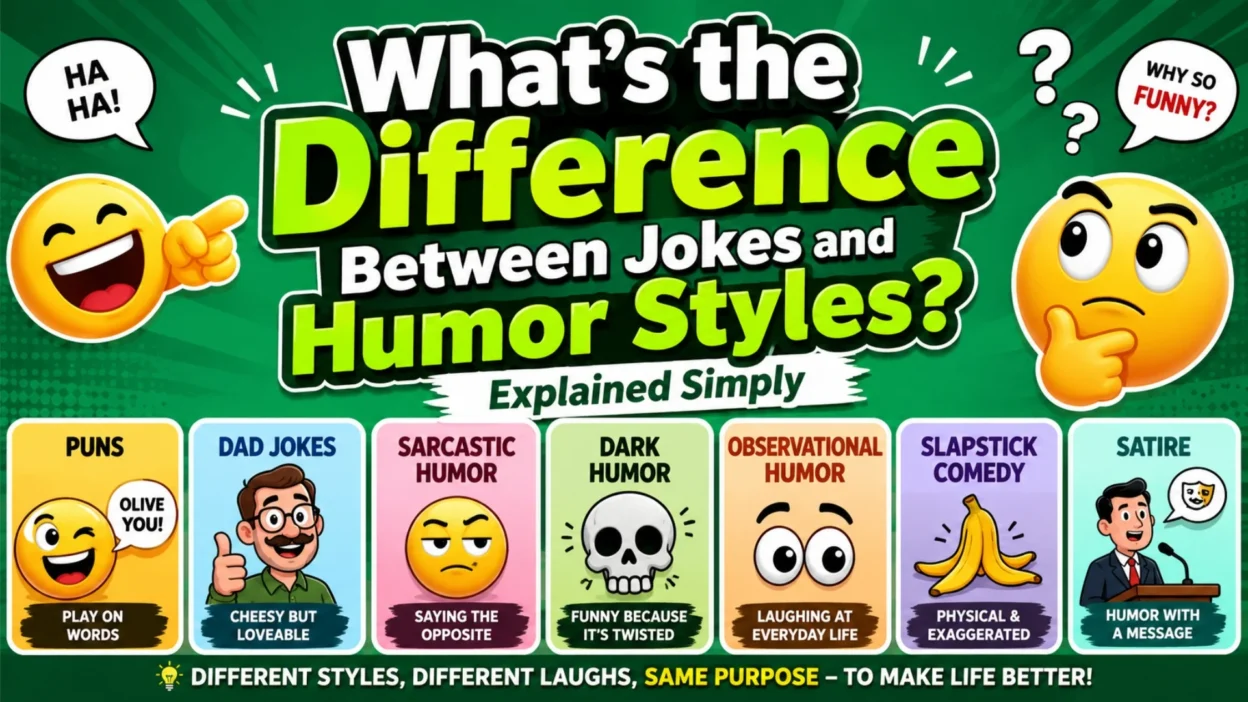
People laugh at different things for different reasons, and that is exactly why humor comes in many styles. Understanding what the difference between jokes really means can help readers enjoy comedy more deeply and even improve their own sense of humor. Some jokes rely on wordplay, while others depend on timing, sarcasm, awkward situations, or clever storytelling. Around the internet, users often search for differences between dad jokes, dark humor, puns, memes, satire, and one-liners because modern comedy has evolved into many unique categories. Humor also changes depending on culture, age groups, online trends, and social situations. This guide explores the major comedy styles people encounter every day and explains how each type creates laughter differently. From witty punchlines to cringe-worthy humor and observational comedy, this article breaks down the characteristics, emotions, and reactions connected with modern joke formats in a simple and entertaining way.
😂 Classic Punchline Humor
- 😄 Traditional setups create anticipation before revealing surprising comedic endings
- 😄 Punchline jokes usually depend heavily on timing and delivery rhythm
- 😄 Short storytelling formats remain popular across television and stand-up performances
- 😄 Simple language makes classic humor understandable for wider audiences globally
- 😄 Many childhood joke books rely on predictable punchline structures successfully
- 😄 Unexpected endings often create stronger laughter than complicated narratives alone
- 😄 Family-friendly comedy commonly uses harmless and universally relatable punchline themes
- 😄 Quick setup formats work perfectly during casual conversations among friends
- 😄 Traditional comedians frequently master pacing techniques for stronger audience reactions
- 😄 Word association often strengthens final joke impact within classic comedy styles
- 😄 These jokes usually avoid controversial or emotionally uncomfortable social subjects
- 😄 Knock-knock humor belongs within this timeless punchline-driven comedy category
- 😄 School humor and playground comedy heavily feature predictable punchline patterns
- 😄 Internet meme culture still borrows heavily from classic punchline structures
- 😄 Short-form video creators frequently adapt punchline humor into digital content
- 😄 Many television sitcoms rely on audience anticipation before delivering punchlines
🤣 Clever Wordplay And Puns
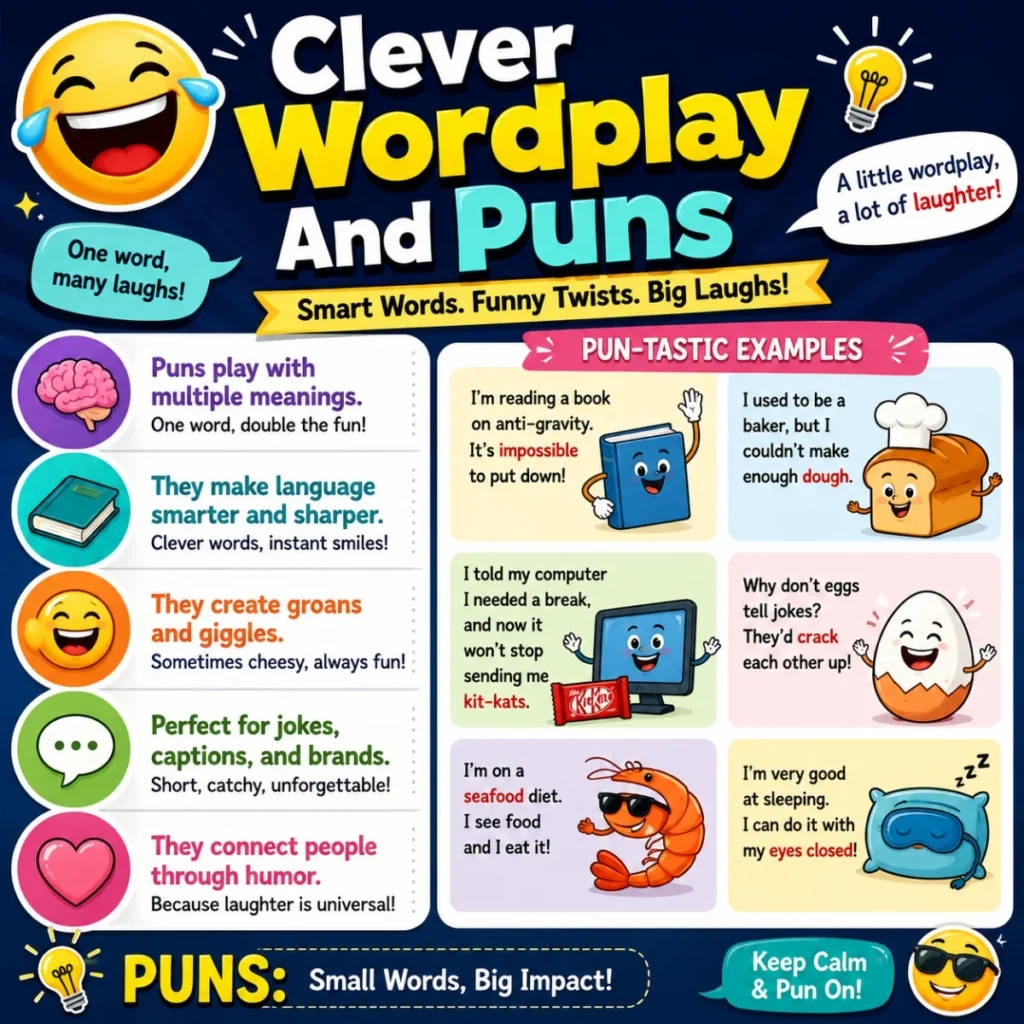
- 😂 Puns depend mainly on double meanings and similar sounding vocabulary
- 😂 Language skills strongly influence how quickly audiences understand pun-based humor
- 😂 Wordplay jokes often create groans alongside genuine laughter from listeners
- 😂 Pun lovers usually appreciate intelligence mixed with playful conversational creativity
- 😂 Social media captions frequently include simple puns for audience engagement boosts
- 😂 Food jokes commonly use ingredient names for humorous word association effects
- 😂 Animal humor often includes species names transformed into funny verbal twists
- 😂 Clever puns reward attentive listeners who understand hidden language references
- 😂 Dad jokes frequently overlap heavily with pun-centered comedic writing styles
- 😂 Visual memes sometimes combine images with puns for layered internet comedy
- 😂 Pun humor works especially well in greeting cards and marketing campaigns
- 😂 Clever spelling changes sometimes produce highly memorable joke punchline effects
- 😂 Online communities regularly compete by creating increasingly creative pun combinations
- 😂 Pun-heavy humor usually feels lighter than sarcasm or dark comedic themes
- 😂 Simple puns often spread quickly because they remain easy to remember
- 😂 Creative wordplay strengthens humor writing across stand-up comedy and online content
😅 Dad Joke Comedy Trends
- 😆 Dad jokes intentionally use predictable humor designed to sound harmlessly embarrassing
- 😆 These jokes frequently involve corny wording and painfully obvious punchlines
- 😆 Family gatherings commonly include playful dad-style humor between relatives casually
- 😆 Internet audiences ironically celebrate cringe-worthy jokes through meme culture popularity
- 😆 Clean humor makes dad jokes accessible for younger and older audiences
- 😆 Groan reactions often become part of the overall comedic experience itself
- 😆 Short conversational formats help dad jokes fit everyday social interactions naturally
- 😆 Many parenting memes heavily feature exaggerated dad joke personality stereotypes online
- 😆 Pun structures remain extremely common within classic dad joke writing styles
- 😆 Friendly awkwardness usually replaces sarcasm or offensive language in these jokes
- 😆 Social media pages dedicated to dad humor attract massive engagement worldwide
- 😆 Predictability surprisingly increases comedic charm within wholesome dad joke storytelling formats
- 😆 Restaurant signs and café boards commonly display pun-based dad joke humor
- 😆 Viral short videos frequently dramatize overly enthusiastic dad joke delivery moments
- 😆 These jokes rarely depend on controversial social commentary or political satire
- 😆 Audience reactions usually involve smiling embarrassment rather than uncontrollable loud laughter
🙃 Dark Humor And Edgy Comedy
- 😬 Dark comedy explores uncomfortable topics using exaggerated or shocking humorous perspectives
- 😬 Audiences often debate ethical boundaries connected with edgy comedic storytelling styles
- 😬 Sensitive subjects require careful timing and audience awareness for successful delivery
- 😬 Some people appreciate dark humor because it reduces emotional tension creatively
- 😬 Internet communities frequently share edgy memes connected with absurd life situations
- 😬 Emotional discomfort sometimes becomes part of the intentional comedy experience itself
- 😬 Sarcasm and irony commonly appear within darker forms of modern humor
- 😬 Stand-up comedians occasionally use controversial themes for dramatic audience reactions
- 😬 Shock value often replaces traditional punchline structures within edgy joke formats
- 😬 Dark humor can divide audiences depending on personal experiences and beliefs
- 😬 Online discussions frequently debate acceptable boundaries for offensive comedy subjects
- 😬 Exaggeration techniques help separate fictional humor from real harmful intentions socially
- 😬 Timing and context strongly affect whether dark jokes succeed or fail
- 😬 Some viewers enjoy edgy comedy because it challenges social comfort zones
- 😬 Psychological relief sometimes explains popularity surrounding emotionally uncomfortable comedic material
- 😬 Responsible comedians usually balance risky themes with clever storytelling techniques
🤓 Observational Comedy In Everyday Life
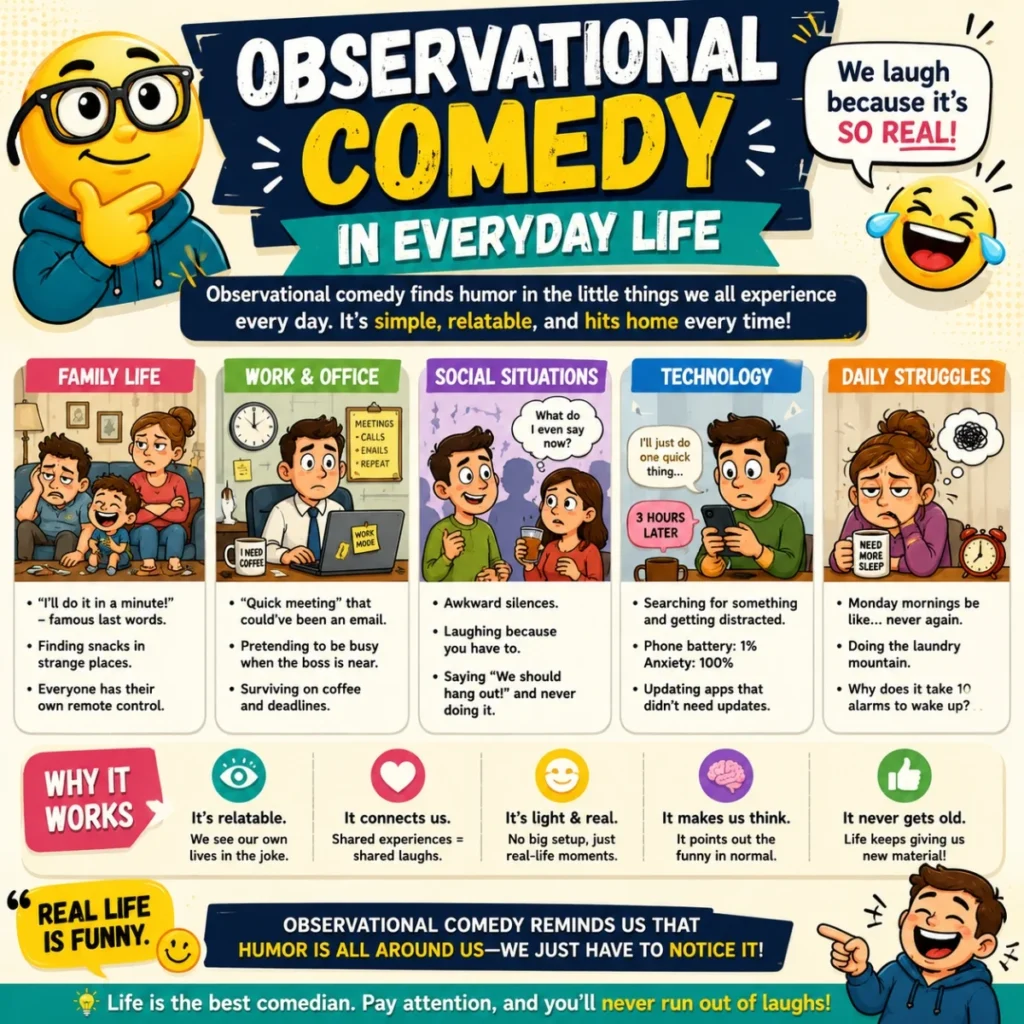
- 😄 Observational humor focuses on relatable experiences people notice daily everywhere
- 😄 Comedians transform ordinary situations into surprisingly funny social commentary moments
- 😄 Grocery shopping, traffic, and technology frustrations commonly inspire observational comedy topics
- 😄 Audiences laugh because shared experiences feel instantly recognizable and personally relatable
- 😄 Stand-up performers often exaggerate tiny social behaviors for stronger comedic effect
- 😄 Relatable storytelling usually matters more than shocking punchlines within this style
- 😄 Modern streaming comedians frequently specialize in realistic everyday life humor topics
- 😄 Workplace awkwardness remains one of the most popular observational comedy themes
- 😄 Relationship humor commonly highlights misunderstandings and strange communication habits humorously
- 😄 Social media creators regularly turn ordinary routines into relatable comedic sketches
- 😄 Timing and facial expressions strengthen observational storytelling during live performances significantly
- 😄 Public transportation experiences often become recurring material for observational comedians globally
- 😄 Audiences appreciate authenticity when comedians discuss realistic personal life situations openly
- 😄 Cultural habits and generational differences frequently inspire relatable observational humor material
- 😄 Many viral memes succeed because they mirror universally recognizable daily frustrations
- 😄 Story-driven humor creates stronger emotional connection than random standalone punchlines alone
😜 Sarcasm Versus Irony In Humor
- 😏 Sarcasm usually involves mocking statements delivered with intentionally opposite meanings
- 😏 Irony happens when reality contrasts sharply against audience expectations or assumptions
- 😏 Sarcastic humor often sounds sharper and more personal during conversations socially
- 😏 Irony appears commonly in storytelling, television writing, and internet meme culture
- 😏 Tone of voice strongly affects whether sarcastic jokes feel playful or rude
- 😏 Dry humor frequently combines sarcasm with emotionally restrained delivery techniques successfully
- 😏 Online text messages sometimes confuse sarcasm because vocal tone disappears completely
- 😏 Situational irony often surprises audiences through unexpected outcomes and contradictions naturally
- 😏 Meme creators frequently use ironic captions paired against unrelated visual content
- 😏 Sarcastic comedians commonly criticize social behavior through exaggerated conversational responses cleverly
- 😏 Many workplace jokes depend heavily on sarcastic observations about stressful routines
- 😏 Irony-based humor feels subtler than aggressive insult comedy or shock humor
- 😏 Internet culture popularized ironic self-deprecating humor among younger digital audiences
- 😏 Clever irony rewards audiences who recognize hidden contradictions inside joke structures
- 😏 Sarcastic humor sometimes risks misunderstandings between unfamiliar conversational participants socially
- 😏 Television sitcom characters often rely heavily on sarcastic personality-driven dialogue styles
🤭 Slapstick And Physical Comedy Styles
- 😂 Physical comedy uses exaggerated movement instead of complex verbal punchlines regularly
- 😂 Slapstick humor often includes falls, accidents, collisions, and exaggerated reactions dramatically
- 😂 Silent film comedians helped popularize physical humor across global entertainment history
- 😂 Facial expressions play major roles within nonverbal comedy performance techniques effectively
- 😂 Cartoon shows frequently rely on impossible exaggerated physical humor scenarios creatively
- 😂 Physical comedy works internationally because language barriers matter much less overall
- 😂 Timing and choreography become extremely important within successful slapstick performances visually
- 😂 Many family movies combine physical humor with emotional storytelling for accessibility
- 😂 Internet prank videos sometimes borrow heavily from traditional slapstick comedy structures
- 😂 Exaggerated reactions increase comedic effect during awkward or embarrassing fictional situations
- 😂 Classic comedy duos frequently mastered visual humor through synchronized performance timing
- 😂 Children often respond strongly to energetic physical humor and visual exaggeration
- 😂 Slapstick rarely depends on deep cultural references or complicated language understanding
- 😂 Actors performing physical comedy require strong body control and expressive movement
- 😂 Visual surprise creates laughter faster than lengthy storytelling within slapstick entertainment styles
- 😂 Modern animation continues evolving physical comedy through exaggerated digital character movement
🎭 Satire And Social Commentary
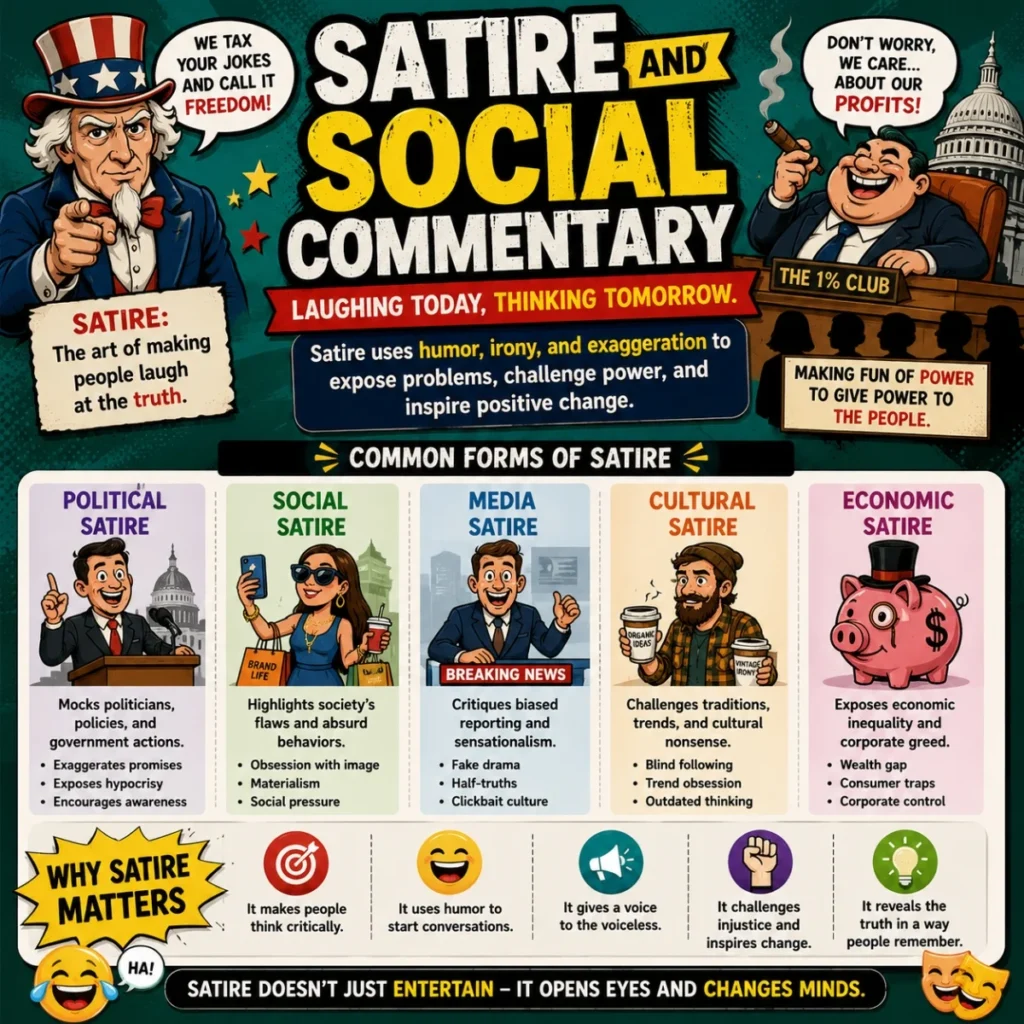
- 😄 Satire criticizes society, politics, or cultural habits through intelligent comedic exaggeration
- 😄 Writers often use humor to highlight hypocrisy and flawed public behavior
- 😄 Political cartoons remain one of the oldest forms of satirical entertainment
- 😄 Satire usually requires audience awareness about current events and social issues
- 😄 Television comedy programs frequently combine news reporting with satirical storytelling elements
- 😄 Exaggerated fictional scenarios often expose real-world problems more effectively through humor
- 😄 Clever satire balances entertainment alongside meaningful cultural or political observations carefully
- 😄 Internet parody accounts commonly imitate celebrities or brands for satirical reactions
- 😄 Social commentary humor sometimes sparks serious public conversations about controversial topics
- 😄 Satirical jokes usually contain deeper messages beneath entertaining comedic presentation layers
- 😄 Audiences appreciate satire because it mixes intelligence with emotionally engaging humor
- 😄 Writers often criticize authority figures through subtle ironic storytelling techniques strategically
- 😄 Online creators frequently parody modern internet trends using exaggerated satire styles
- 😄 Satirical comedy differs from insults because it targets broader systems thoughtfully
- 😄 Social commentary often feels more educational than purely random joke formats
- 😄 Successful satire requires audiences to recognize hidden criticism within humorous exaggeration
🤪 Cringe Comedy And Awkward Humor
- 😅 Cringe humor creates laughter through embarrassment and socially uncomfortable interactions intentionally
- 😅 Awkward silence often becomes part of the comedic rhythm within cringe scenes
- 😅 Television mockumentary shows helped popularize modern cringe comedy styles globally
- 😅 Social anxiety situations commonly inspire painfully relatable awkward comedy moments online
- 😅 Characters frequently misunderstand social cues during cringe-driven comedic storytelling scenarios
- 😅 Audience discomfort surprisingly strengthens emotional engagement within awkward humor formats
- 😅 Viral internet clips often feature accidental cringe moments shared for entertainment
- 😅 Embarrassing workplace conversations regularly appear within cringe comedy television episodes humorously
- 😅 Cringe humor differs from slapstick because emotional awkwardness replaces physical accidents
- 😅 Secondhand embarrassment becomes central to audience reactions during uncomfortable comedic scenes
- 😅 Some viewers deeply enjoy awkward realism while others avoid cringe entertainment completely
- 😅 Character overconfidence often increases comedic embarrassment inside cringe-based storytelling dramatically
- 😅 Reality television occasionally creates unintentional cringe humor through awkward public behavior
- 😅 Online dating experiences commonly inspire modern awkward comedy sketches and memes
- 😅 Cringe humor thrives heavily across short-form video platforms and reaction content
- 😅 Writers carefully balance discomfort levels to avoid overwhelming audience enjoyment completely
🎮 Internet Meme Humor Evolution
- 😂 Meme culture spreads humor rapidly through images, captions, and relatable online trends
- 😂 Viral formats evolve constantly as internet communities remix popular joke templates creatively
- 😂 Reaction memes often communicate emotions faster than traditional written comedic storytelling
- 😂 Younger audiences frequently understand meme references better than older generations socially
- 😂 Absurd humor became increasingly popular through random internet meme culture trends
- 😂 Meme jokes usually depend heavily on timing and current online relevance
- 😂 Social media platforms accelerate how quickly meme formats become globally recognizable
- 😂 Image macros remain among the most iconic styles within internet comedy
- 😂 Relatable life struggles commonly inspire viral memes shared across multiple communities
- 😂 Gaming culture strongly influences modern meme humor and online comedy references
- 😂 Meme trends sometimes disappear rapidly once audiences overuse familiar joke formats
- 😂 Internet humor often blends irony, sarcasm, and absurdity simultaneously within memes
- 😂 Viral catchphrases regularly transform ordinary conversations into humorous online references naturally
- 😂 Meme creators frequently parody celebrities, movies, and trending cultural events creatively
- 😂 Digital humor spreads faster today than traditional stand-up comedy performances historically
- 😂 Meme communities constantly invent fresh formats inspired by evolving internet culture
🤠 Regional And Cultural Comedy Differences
- 😄 Humor styles change significantly depending on language, traditions, and social expectations
- 😄 Cultural references strongly influence whether jokes feel understandable or confusing internationally
- 😄 British comedy often features dry humor and understated sarcastic storytelling techniques
- 😄 American humor commonly emphasizes punchlines, exaggeration, and energetic comedic delivery styles
- 😄 Asian comedy shows sometimes focus heavily on physical reactions and game entertainment
- 😄 Regional slang can completely change how audiences interpret humorous conversations socially
- 😄 Translation difficulties sometimes weaken wordplay and pun-centered comedic material dramatically
- 😄 Cultural sensitivity matters greatly when sharing jokes across international online communities
- 😄 Internet platforms increasingly mix global humor trends from different entertainment cultures
- 😄 Local traditions often inspire community-specific memes and humorous storytelling patterns naturally
- 😄 Family expectations influence acceptable comedy topics within different cultural backgrounds worldwide
- 😄 Religious humor may feel acceptable within some communities yet offensive elsewhere
- 😄 Audience familiarity with celebrities affects effectiveness of parody and satire dramatically
- 😄 Cross-cultural humor succeeds best when focusing on universal human experiences naturally
- 😄 Travel experiences frequently expose people to completely different comedic communication styles
- 😄 Global streaming services continue blending regional humor into mainstream entertainment culture
😎 Self-Deprecating And Relatable Humor
- 😅 Self-deprecating comedy involves joking about personal flaws or awkward experiences openly
- 😅 Many comedians use vulnerability to build stronger audience emotional connections naturally
- 😅 Relatable humor often feels comforting because audiences recognize shared life struggles
- 😅 Dating disasters commonly inspire humorous self-deprecating storytelling across internet platforms widely
- 😅 Confidence balance matters because excessive negativity can weaken comedic effectiveness emotionally
- 😅 Younger online audiences frequently enjoy ironic self-deprecating meme humor styles today
- 😅 Personal storytelling creates authenticity within stand-up comedy and social media sketches
- 😅 Everyday mistakes become entertaining when exaggerated through playful humorous perspectives creatively
- 😅 Relatable financial struggles commonly appear within modern online comedic discussions frequently
- 😅 Self-aware humor usually feels less aggressive than insult-based comedy formats socially
- 😅 Comedians often transform embarrassing memories into memorable audience laughter successfully
- 😅 Social media influencers regularly use relatable humor for stronger follower engagement
- 😅 Honest storytelling helps audiences emotionally connect with humorous personal experiences naturally
- 😅 Self-deprecating jokes sometimes reduce tension during uncomfortable social interactions smoothly
- 😅 Humor based on shared struggles often spreads rapidly across online communities
- 😅 Relatable comedy thrives because ordinary experiences connect people through laughter universally
FAQ Section
❓ Why do people enjoy different humor styles?
People connect emotionally with humor matching their personality, culture, experiences, and communication preferences.
❓ Are dark jokes and offensive jokes identical?
No, dark humor explores uncomfortable themes, while offensive jokes intentionally disrespect individuals or communities.
❓ Why are dad jokes so popular online?
Dad jokes feel wholesome, predictable, relatable, and easy for audiences of every age group.
❓ What makes meme humor different from traditional comedy?
Memes spread visually online and rely heavily on internet culture, trends, and fast recognition.
❓ Why does sarcasm confuse people online sometimes?
Text messages remove vocal tone, making sarcastic intent harder for readers to recognize correctly.
❓ Can cultural differences affect comedy understanding?
Yes, language, traditions, slang, and social norms strongly influence comedic interpretation worldwide.
Conclusion
Understanding what the difference between jokes really means helps people appreciate humor on a deeper level. Every comedy style creates laughter differently, whether through clever wordplay, awkward situations, relatable storytelling, satire, sarcasm, or internet memes. Some jokes rely on emotional connection, while others depend on surprise, timing, or cultural references. Modern humor constantly evolves because online communities and social media trends shape how audiences react to comedy every day. By exploring different joke formats, readers can better understand why certain humor styles feel funnier to specific audiences. Comedy remains one of the most universal forms of entertainment because laughter connects people through shared experiences, creativity, and emotional reactions across cultures and generations.

Nathan Cole is a humor writer at PunsStation who loves creating funny puns, clever pickup lines, and jokes that make people laugh